
Barbara and I have relocated to New Zealand, but we’re still finding ways to continue training tour guides and telling stories. Having recently assumed the Manager position at Mangawhai Museum, I was asked by the local Rebus club to fill in for a cancelled speaker. The talk I gave was a new one. Beyond theContinue reading “New training presentation: Beyond the Box and Panel”
Tag Archives: Heritage
New training module: Giving Great Guided Tours
It’s interesting that some of our best modules come out of museum’s specific requests. In this case, Barbara’s new workplace, the Kauri Museum had a specific need. They only had two staff-members who knew how to give an introductory tour to the frankly massive facility, yet demand was only increasing. Tom sat down with BarbaraContinue reading “New training module: Giving Great Guided Tours”
New history talks: 30 minute exciting presentations for when you’ve only got a brief slot to fill

Don’t have time for a whole hour of history? Based on some specific requests, we have added two more 30 minute presentations to our menu. I suspect these will just whet your whistle for a longer talk, but sometimes you just need a few good stories! TOSS ‘EM INTO THE RIVER: Vigilantes in 19th CenturyContinue reading “New history talks: 30 minute exciting presentations for when you’ve only got a brief slot to fill”
New History Talks: BC and Christmas History
We’re very happy to announce a few new historical presentations available. A TALE OF TWO VANCOUVERS: 1846, BC, Washington, Oregon and the West That Wasn’t. Length: 1 hour.Recommended audience: 3-30 personsDelivered via: Zoom; Google Meets. Where does British Columbia’s name come from? How was Washington state nearly part of Confederation? What is the connection between one of Canada’s greatest blues-rock bands, anContinue reading “New History Talks: BC and Christmas History”
Two new interpretive training modules!
We just enjoy the virtual medium so much, we can’t stop. Check out our training page, for two new interpretive training modules. THE INTERPRETER’S TOOLBOX: Tours, Demonstrations, Conversations and When to Use Them Length: 1 hour. Recommended audience: 3-10 persons Delivered via: Zoom, Google Meets. To a tour guide, everyone looks like an audience withContinue reading “Two new interpretive training modules!”
Interpre-Memes: Part 2

More training tools for interpreters that go beyond a dry text-heavy document. Find the other Intrepre-Memes here. This is one is one of my favourites, even if it comes from the author of “White Man’s Burden”. The next was a recent discovery while reading Tolkien’s Letters. It is, I will admit, written a very OxfordContinue reading “Interpre-Memes: Part 2”
Review: A Tale of Three Hills and Two Monuments

Tom Long, 2021 I want to tell you about the three kopjes in South Africa, each with its own museum on top. (You could visit my 2017 travel blog here if you were so inclined). The Voortrekker Monument atop a tall hill (or kopje) caught my eye because of its colonial and “pioneer” narrative andContinue reading “Review: A Tale of Three Hills and Two Monuments”
From word balloons to historic sites: What heritage can learn from graphic historical fiction
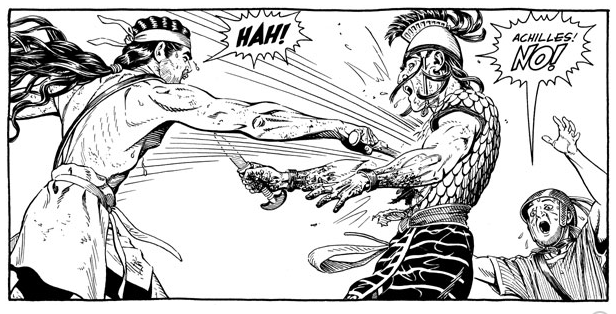
Tom Long, 2021 Comic books and history are not strangers. Next time you are in your local bookstore, find the (nowadays guaranteed) graphic novel section -stroll past the men in tights and teen manga- and you may find some of these interesting works of historical fiction. As museum and heritage people, there’s a lot weContinue reading “From word balloons to historic sites: What heritage can learn from graphic historical fiction”
Interpre-Memes: Part 1
Training tools for interpreters that go beyond a dry text-heavy document. This is one I found on facebook and inspired my own creations. My first try was a bit explanatory, but tried to get across one of my fundamental principles of interpretation. My second effort was a bit more in keeping with modern memes. Here’sContinue reading “Interpre-Memes: Part 1”
Interpretation Canada Article: Program Creation
This article was originally published in InterpScan, the Interpretation Canada magazine in Spring 2011. Why do this?

