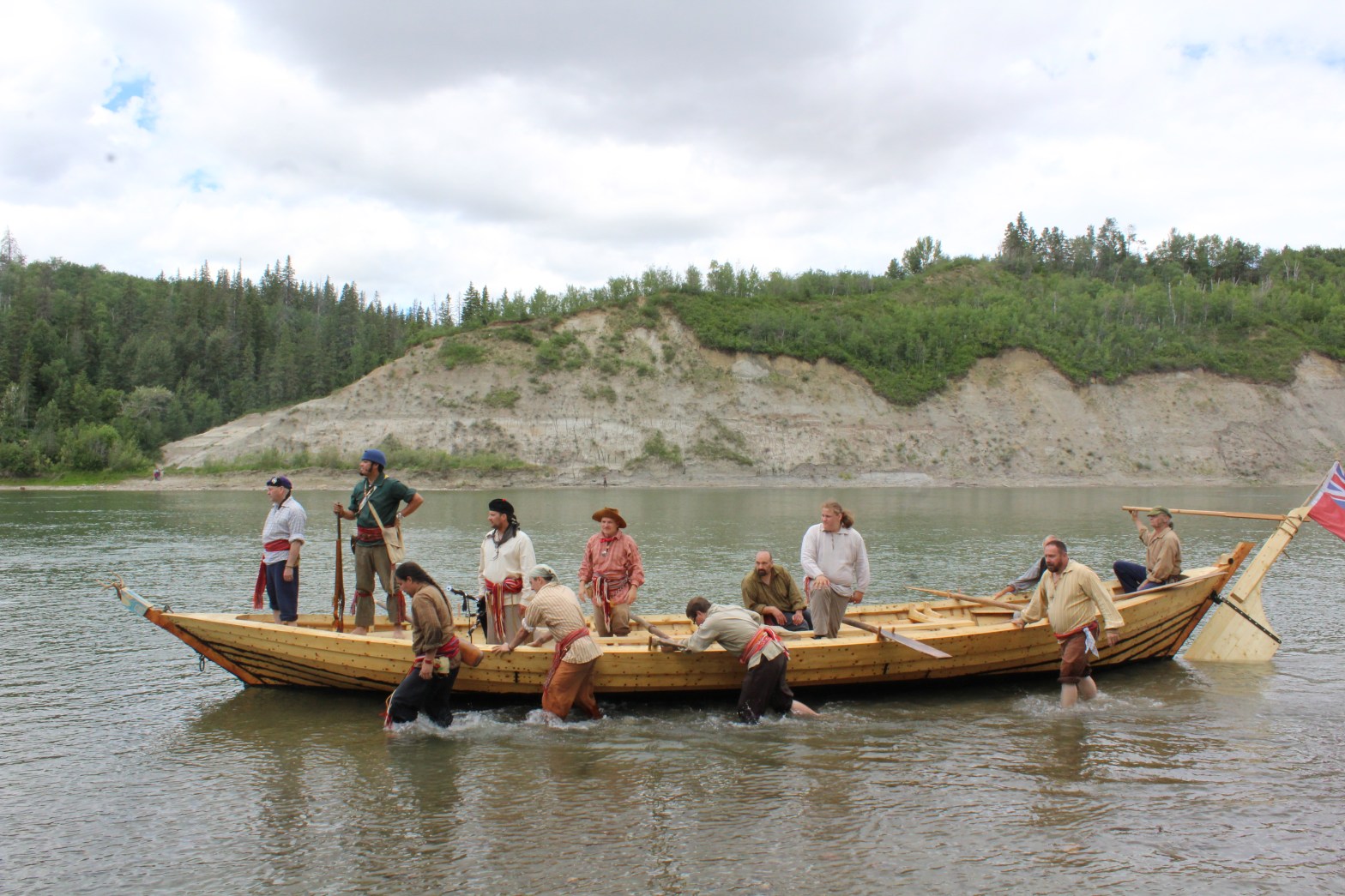
My hometown is Edmonton and my first museum job was as an interpreter at Fort Edmonton Park. I loved it so much I stayed for twenty years. In my final five years or so I got to oversee the building of the park’s fourth York Boat, a 19th century cargo-hauler that served the HBC in transporting furs and trade goods up and down the North Saskatchewan River. The project was completed in 2018.
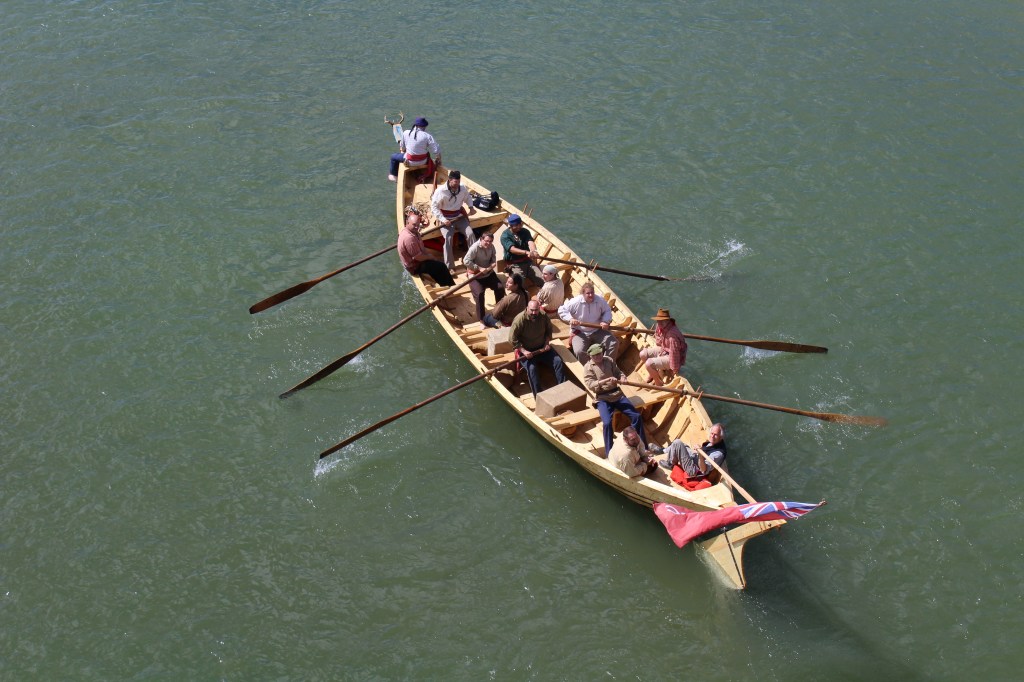
Edmonton can be an insecure city, constantly worried about what the rest of Canada thinks of it. But in the middle of the 19th century, it was the premiere trading post in Western Canada and an essential link in the Hudson’s Bay Company’s trans-continental transportation network. It was also the centre of a growing Métis community that treated Fort Edmonton as a place to live, and not just a place to work.
The building of York Boats at Fort Edmonton originally served an economic purpose, but at the rebuilt living history museum, Fort Edmonton Park, the building (and rowing) of these boats was among our primary demonstrations of heritage trades (alongside blacksmithing and early auto maintenance). Because many of the historic boat-builders, and most of the rowers, were Métis, our interpreters connected the boats to an Indigenous story.
The first Fort Edmonton Park York replica boat was built in 1974. Two more followed within twelve years and as the older ones fell apart. The project to build York Boat #4 in the 2010s was one of the highpoints of my life and career. There were so many special moments of community, or skill, or experimental archaeology, and of self-discovery – it formed the basis of this blog and this passion.
Specifications
York Boats were not built to a standard specification. This boat was on the smaller side, under 40ft long. The majority of its construction was carvel, using spruce strakes and copper rivets.
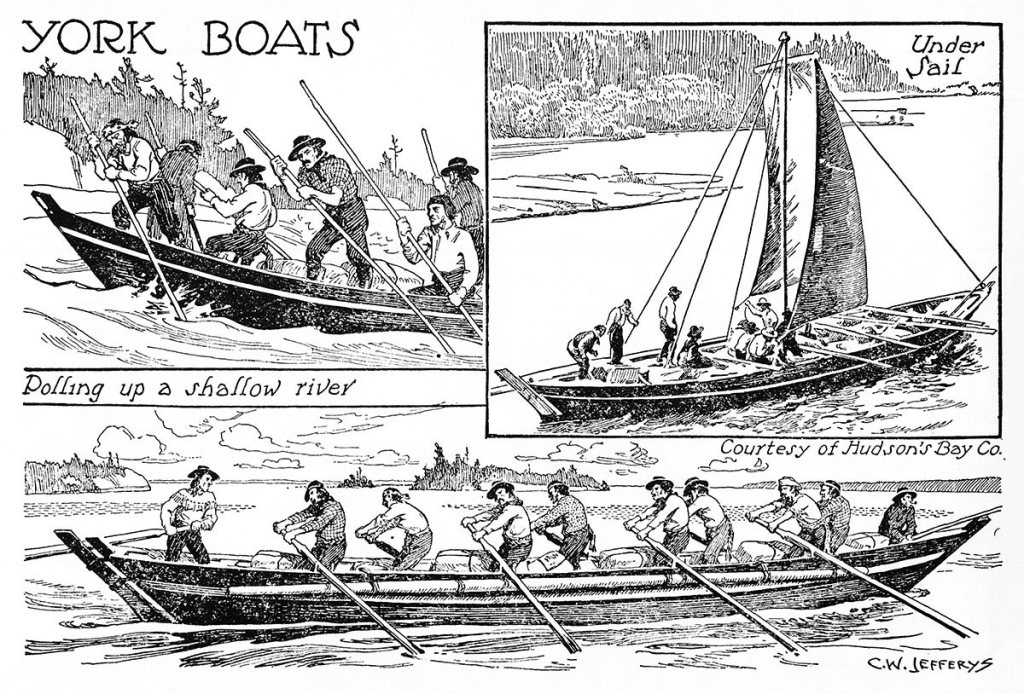
C.W. Jefferys the historical artist featured above, described the boats thusly: “York boats were built of selected spruce and shaped like whale boats, the bow and stern pointed at an angle of forty-five degrees. They were fitted with a rudder and a removable mast, which when not in use was sometimes slung alongside, as shown in the drawing. They were of various sizes, from twenty-eight feet to forty feet in length.” (Jefferys, Charles W. 1945 The Picture Gallery of Canadian History Volume 2, p.217)
Benefits of the Build
Joseph Isserlis was the boatbuilder at Fort Edmonton Park for over 30 years. He repaired one boat, built another, built a red river cart, and started the work on the latest boat, later known as “Joseph’s Folly.” When it became clear that he could not finish it alone before retirement, we took the opportunity to hire two more boatbuilders (Dougie Bewick and Dave Rose) and recruited volunteers. This team not only supplemented Joseph’s skills and knowledge, but allowed for work and interpretation of the project to be carried out simultaneously – as it all happened in front of a curious public.
Without having worked at a museum and/or engaged in a heritage trade, it is difficult to imagine how difficult it is to work and to satisfy the public’s interest at the same time. Joseph used to describe this as the tension between the process and the product. For most of his career, we emphasised process, with work ceasing to explain each step to visitors – slowing things considerably. But as Joseph’s retirement neared, we were eager to pass on his skills and advance completion towards the product.
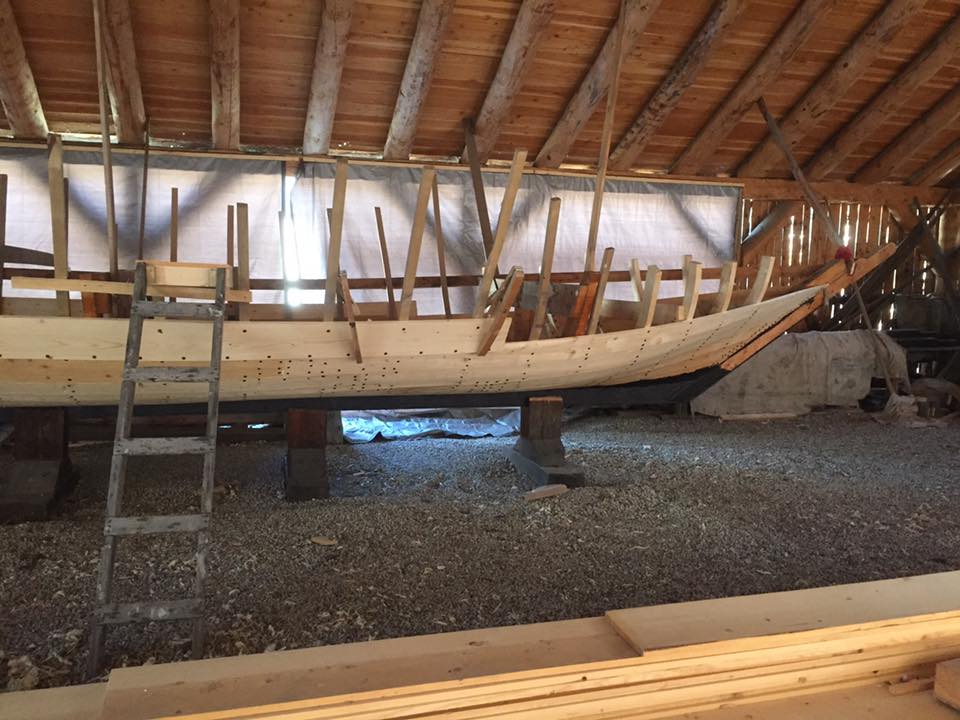
By 2013 more volunteer boatbuilders were recruited, more material was purchased, and eventually money was found for a second Boat Builder position. Some post-season work was authorized and some aspects paid for by a grant through the Indigenous Relations office (as the York boats were built and crewed by Métis voyageurs and considered a distinct Métis invention or adaptation). Doug Bewick, a shipwright, and David Rose, a carpenter, were the other lead builders on the new project. Many of the volunteers were either amateur or retired woodworkers and/or canoe enthusiasts.
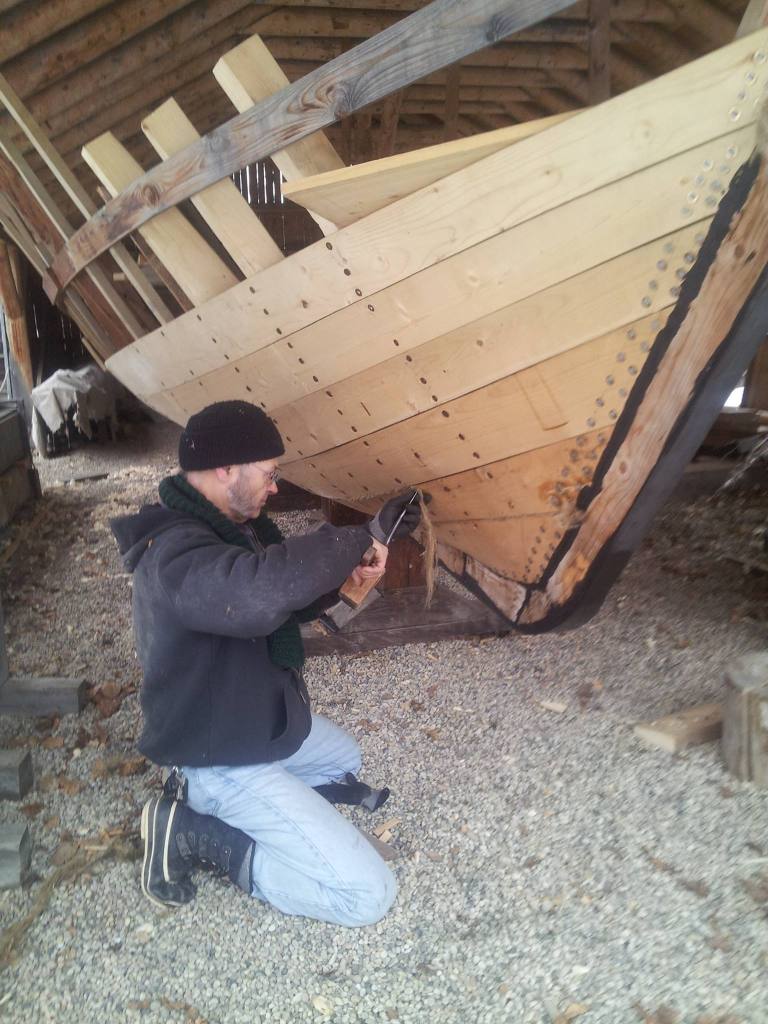
York boats were historically constructed in a rather slapdash fashion. The Company considered it more economical to build new boats than to maintain old ones. Thus proper riveting and other techniques were not traditionally used. Fort Edmonton Park’s York Boat was not built with 100% accuracy then, but with considerations for longevity. Most work done in front of the public was with historical tools and methods, including steaming strakes.
York Boats are still built in places in Manitoba and occasional replicas have been worked on elsewhere, but in many ways Joseph Isserlis was among a very select few in Western Canada with this practical knowledge. Plans in archives did not always agree, and living examples to learn from were few and far between. In 2011, a York Boat re-enactment was launched in Northern Alberta using a boat constructed by North Woods Canoe Company. Our project, over the course of the five years or so, trained two more boatbuilders in how to construct York Boats and over a dozen volunteers gained extensive experience in wooden-boatbuilding.
In addition, the project was completed with full visitor access. The public were treated to live discussion with many of the workers on the project, and often returned to see progress year after year.
The volunteers and boatbuilders were so filled with the spirit of community and the excitement of their craft, that they formed the York Boat Historical Society, hoping to take on more projects and build independently. The City of Edmonton, who managed Fort Edmonton Park, was unlikely to want to continue building York Boats (it didn’t necessarily need more than one and the process was expensive), and the society hoped to find other opportunities and funders to keep working. For various reasons, not a great deal of success was had, but the passion and the community were clear.
Life after Launch
Fort Edmonton Park and I had hoped to have the new boat ready for Canada’s sesquicentennial in 2017, but the project was not complete. York Boat #4 was instead completed and launched on June 30th, 2018, in time for a celebratory re-enactment for Canada Day on July 1.
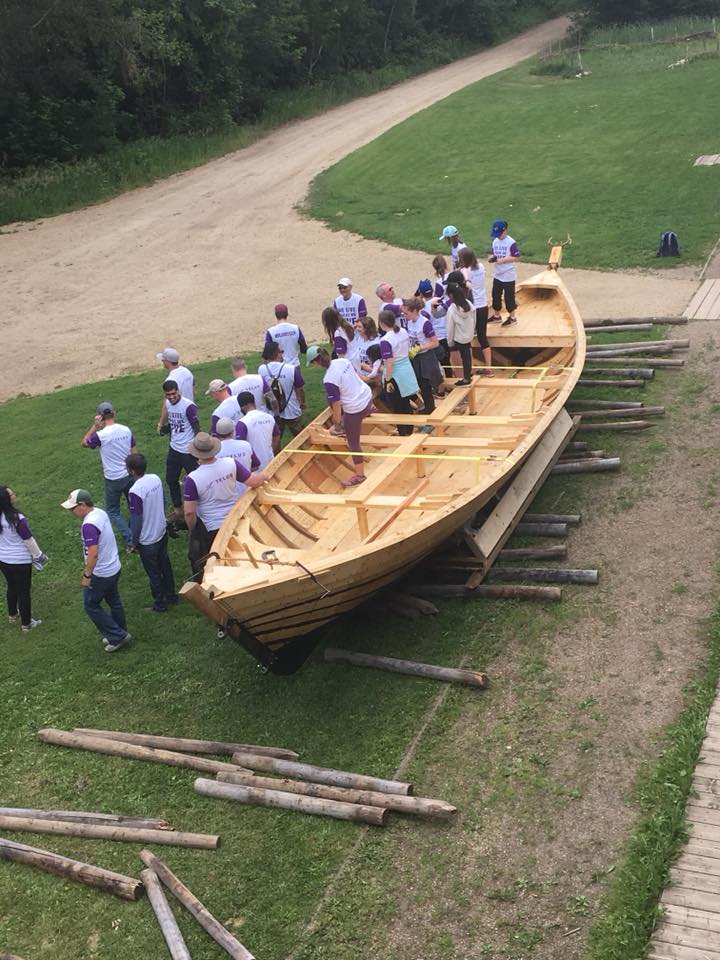
Unfortunately soon after this re-enactment, Fort Edmonton Park was shut down for two years of renovations. The boats were brought up on land and during the process, were damaged. Hard feelings ensued, as the boatbuilding team had not been consulted or included in the process of beaching them.
The boats are still on display on land at Fort Edmonton Park, where visitors can see and learn about them, but the boat-building process is no longer part of the interpretive program. I left for other reasons in 2019, though not in any bitterness.
Further Thoughts
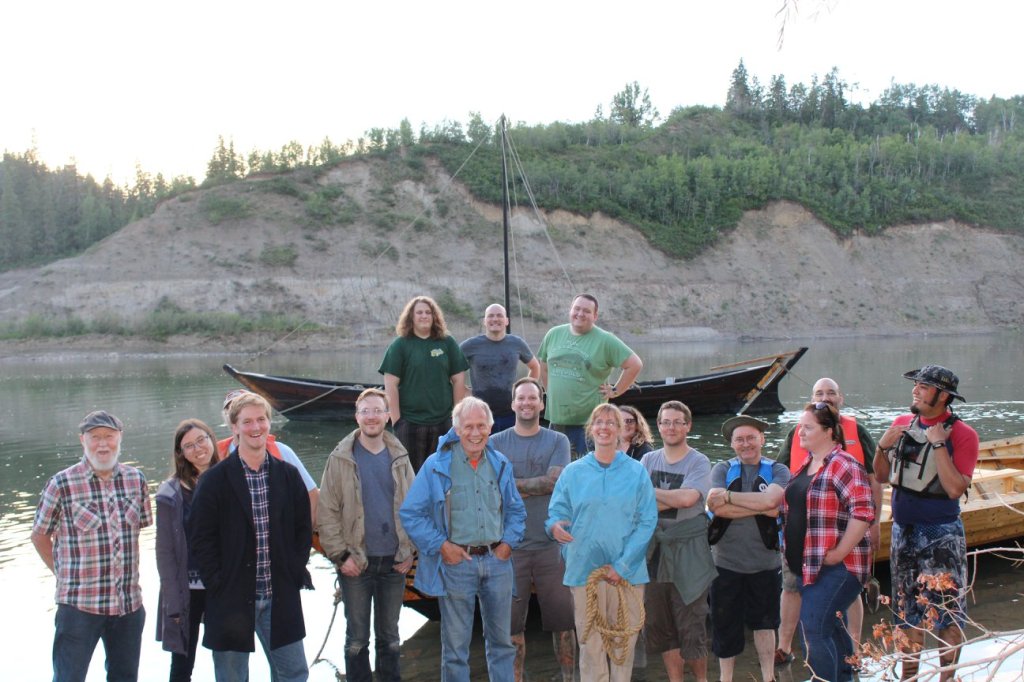
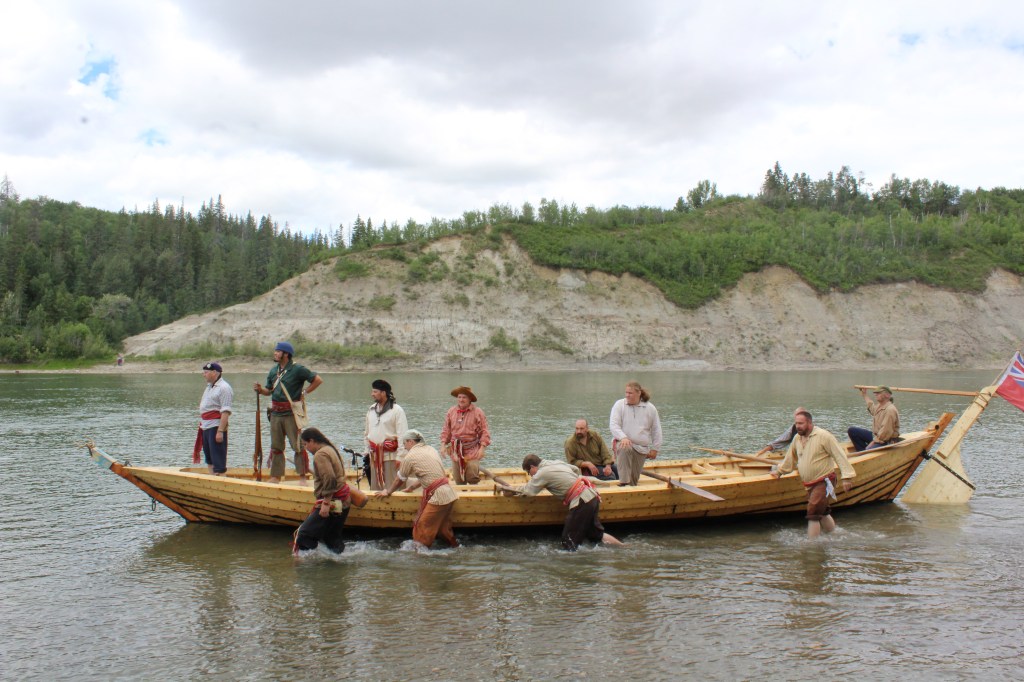
Needless to say I am immensely proud of the work we did in building YB4/Joseph’s Folly, and in continuing Fort Edmonton Park’s boatbuilding tradition and sharing Edmonton’s history. We built community, shared heritage skills, commemorated the past, and engaged in some experimental archaeology. In addition, generations of Fort Edmonton Park interpreters rowed these boats in re-enactments, both small and large, and learned about teamwork and boating.
But I have to admit, I did not fully grapple with what I understand now: that without a fulsome plan and institutional support for any boat after its build, the project is likely to fail in the long term.
The Clio’s Armada project has taught me that boat building projects must be clear on how the boat will be used, funded, and supported in the long-term if they wish the boat to continue on as a working replica. I did not build this long-term plan or gather support, assuming the status quo would proceed. Nor did I enact enough plans to use the new boat to connect with our Métis Nation of Alberta (now Otipemisiwak Métis Government) partners and create programmes for youth. Instead the museum and the city lost interest in on-water reenactment, let alone boatbuilding, and the boats are now devoted only to drydocked interpretations (which are still valid purposes).
As it becomes less economically viable for wooden and other traditional boatbuilding to continue, it is the responsibility of museums, non-profits, and societies to find spaces in which to carry on these traditions. But exactly how they do so and what happens to the boats after their launch is fraught with budget and safety considerations.
Sources
Anderson, Nancy Marguerite, The York Factory Express. Vancouver: Ronsdale Press, 2020.
Griffith, Teresa York Boat Captain: 18 Life Changing Days on the Peace River. Self-published. 2013.
Johnson, Dennis. York Boats of the Hudson’s Bay Company: Canada’s Inland Armada. Fifth House Books, 2006.
Roemmich, Carolyn Jakeway. Our Living History: The First Fifty Years of the Fort Edmonton Foundation. Fort Edmonton Foundation, 2019.
Appendix: York Boats at Fort Edmonton 1973-86.
Fort Edmonton Park’s first York Boat (“YB1”) was built for the City of Edmonton in 1973 by Jamie Thompson. This boat was later drydocked/beached on the rivershore and destroyed by ice in the ensuing decades.
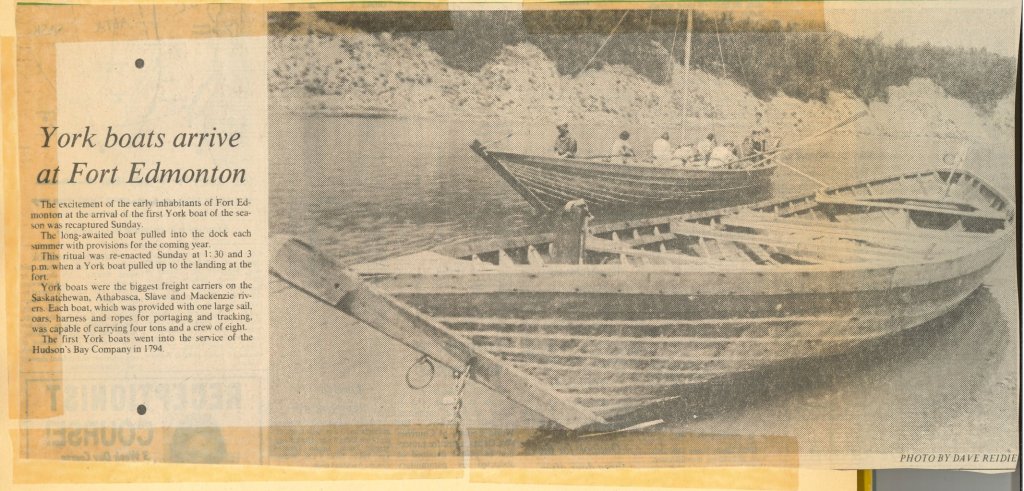
The second York Boat (YB2) was built for the City later in the decade. In 1976, this boat made a reenactment voyage from Winnipeg to Edmonton. Joseph Isserlis was a part of the crew. After 1986 YB2 was retired and drydocked inside the Fort walls, where it still sits (albeit decaying) as of 2019 as a display piece. Joseph Isserlis assisted with the construction and maintenance of this boat.
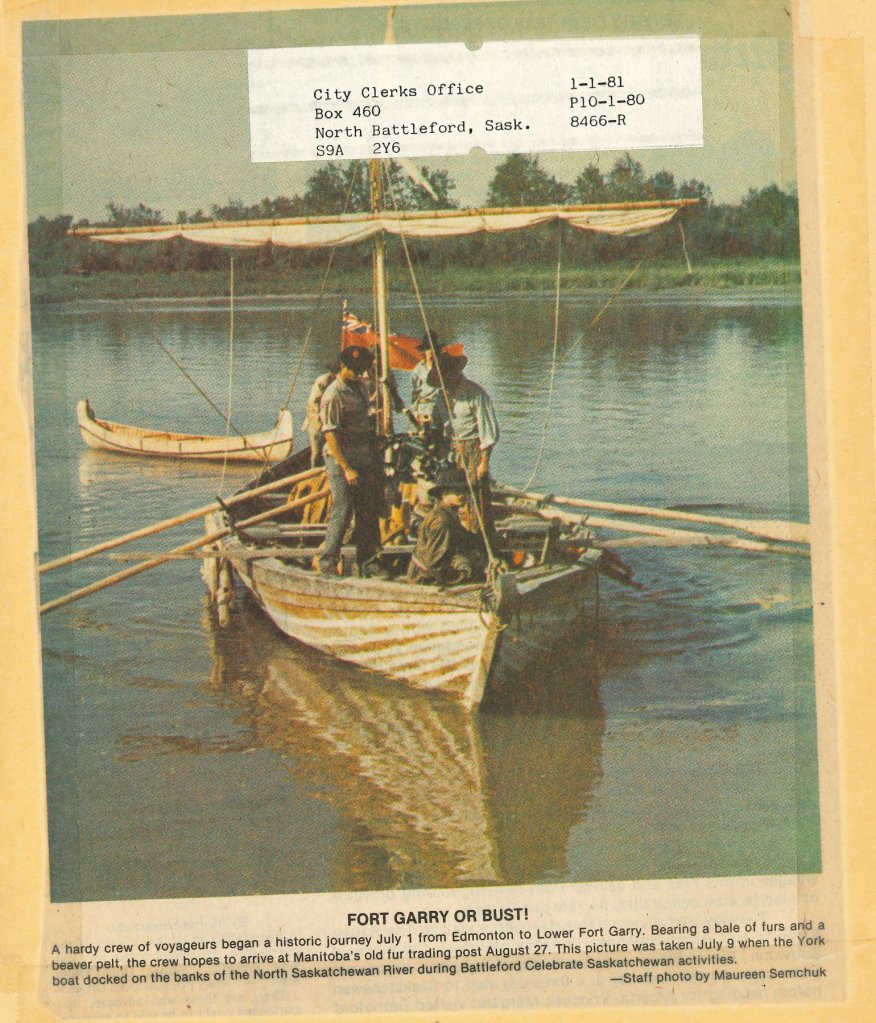
The third York Boat (YB3 or later Methuselah) was finished in 1986 by a team led by Joseph Isserlis. It was transported in an unfinished state to Vancouver for Expo ‘86 and completed and launched there in False Creek before being displayed for the event. It was then transported back to Edmonton where it has been used on the river ever since for York Boat re-enactments and display purposes. At Expo 86, this boat would have been seen alongside the Golden Hinde replica, Loo Taas, and other replica watercraft.

All thoughts and ideas above are attributed solely to me, although there are lots of great York Boat sources out there.
Clio’s Armada is a blog series Tom is writing based on his passion for heritage boatbuilding and examples he has seen of it around the world. Read about over twenty examples from the 1860s to the 2010s!

