
Tom Long, 2024
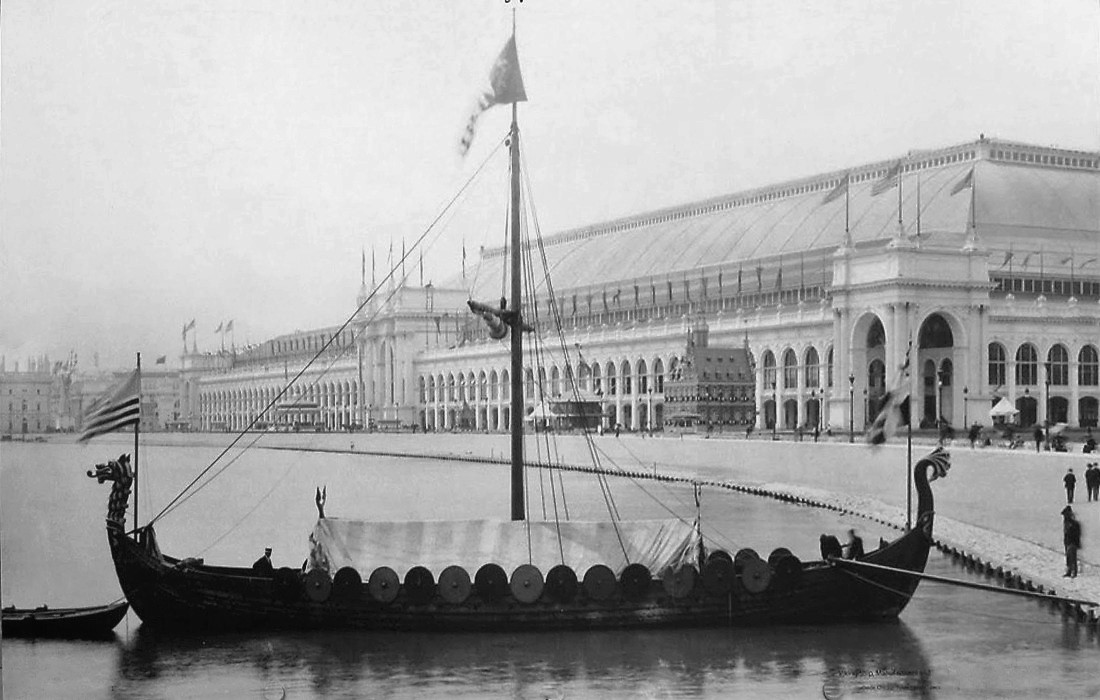
I still think I’ve found the earliest modern example of heritage boatbuilding with Napoleon III’s 1863 trireme reconstruction effort, but I was still shocked at the vintage of this 1893 viking longship replica, appropriately called Viking.
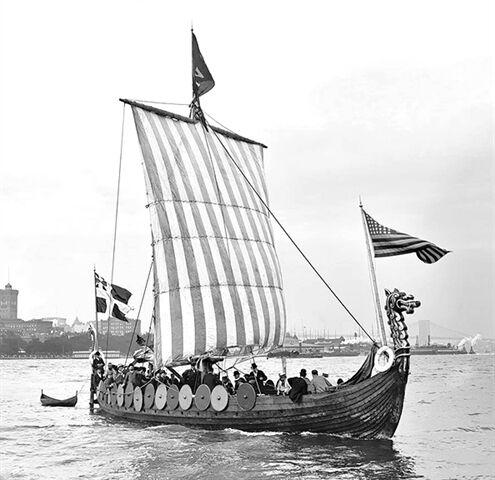
In 1880, a new archaeological discovery of a longship sparked a great deal of interest. The Gokstad is a 9th century ship and, according to wikipedia, the largest preserved viking longship in Norway. This ship has been used as the basis for replica several times over the last hundred years and change, the earliest being this build in 1893.

I always knew I wanted to cover a Viking longship for this blog, but even knowing that the mystique of the vessel and of the Viking mythos, I was shocked at just early this build was (and how many replica longships are out there)!
I settled on Viking because of its Gilded Age construction, relishing getting to look at the roots of the practice that continues up until today. The ship was built and sailed across the Atlantic to attend the famous 1893 Columbian Exposition in Chicago, the predecessor of the 1986 Expo in Vancouver that has provided so much grist for my mill.
What early traditions did the 19th century build and voyage of Viking lay out that we can follow through the 20th and 21st century?

Specifications
Length 78 ft
Beam 17 ft
Height 6.5 ft
Benefits of the Build
The impetus for the build is frequently given to Captain Magnus Andersen, editor of the Norwegian Seaman Gazette, who captained Viking on her transatlantic voyage. He may have been inspired by a suggestion from an American general after the discovery of the Gokstad.
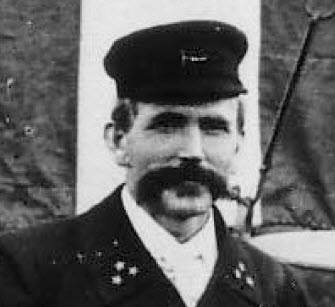
As for funding, according to Professor Hjalmar Hjorth Boyesen, a contemporary of the build and voyage “…an invitation was issued for a national [Norwegian] subscription and the required amount was procured, mostly in the small sums of ten, twenty-five, and fifty cents. The undertaking, I am told, was not popular with the upper classes, while it appealed strongly to the imagination of the seafaring population which readily kindles at an enterprise with a touch of heroism. It was first proposed to christen the ship Leif Ericson; but for some reason the name The Viking was preferred.” (Boyesen, 1894) Early crowdfunding!
Norway’s 19th century saw it separated from Denmark and joined to Sweden, but Norwegians still harboured a romantic nationalist sentiment, undoubtedly buoyed by the mystique of Viking seafaring and a project like this.
Christen Christensen was the owner of a shipyard in Norway that would build Viking. He inherited management of Rødsverven shipyard from his widowed mother and, before her, his deceased father. He began making schooners at the end of the 1860s. By the late 1880s he seems to have built the shipyard into a small empire by taking over other yards in the area, and was chosen or volunteered as the builder of the replica.

I can’t prove it of course, but since Christensen’s business took off with a whaling fleet in the 1890s, I have to imagine that the building of the Viking at Framnæs shipyard (Framnæs mekaniske Værksted) in 1892-3 was something of a P.R. coup. Such a monumental accomplishment, sailed across the Atlantic and in all the papers, no doubt helped the shipyard and Shields & Værge, his new whaling company, to gain substantial notoriety.
“Clinker built, its planks are fastened together with thousands of iron rivets. At sea, the Viking averaged 10 knots and the hull was observed to flex with the waves.” (History of the Viking) It is made from Norwegian Black Oak, according to this article, while others point out that the keel was imported from Canada.
“The materials needed were hard to come by, as the dimensions of the original keel and the mastfish were taken from oak logs of unusual dimensions. The 17 m long keel required a strait oak log from a 25 meter tall tree. While such trees existed in Norway in the viking age, this log now had to be imported from Canada. The rest of the ship was made from local oak trees. The ship was built in a shed at Framnes shipyard and no strangers were allowed entrance to the site during the construction. Unfortunately, this included photographers, so no photos were taken at this stage.” (Løset, 2004)
There isn’t much detail about how much the builders of Viking herself managed to pass along their heritage skills to a new generation, but this was undoubtedly the beginning of a significant revival of the craft. Gokstad has been used as a model for several replicas since.
Life After Launch
Viking was launched amidst throngs of people, and according to the florid prose of contemporary Professor Boyesen: “The beauty of her lines, and her graceful shape aroused universal admiration; and many were those who declared that the art of shipbuilding had been lost with the old Norsemen, and was now on the point of being recovered. What ugly, unwieldy, clumsily constructed hulks were the caravels of Columbus, and both the warships and the merchant vessels of the fifteenth and sixteenth centuries, compared to this swift and slender ocean racer every single feature of which was the result of centuries of marine experience.” (Boyesen, 1894)
According to the Friends of the Viking longship, the Norwegians planned their voyage with the remark that “Americans admire courage.” But as per Boyesen’s cheekiness above, there was definitely a point to be made. The 1893 World’s Fair was specifically the Columbian Exposition in order to honour Christopher Columbus (ick). The Norwegians wanted to remind and reinforce to everyone that Columbus had not actually been the “first European” to “discover” the New World. This is now popularly accepted, but seems to have been a fringe theory at the time.
Twelve Norwegians, under the command of Captain Magnus Andersen sailed her from Bergen, Norway via Newfoundland and New York, up the Hudson River, through the Erie Canal and into the Great Lakes to Chicago.

By Kozak nevada – Own work, CC BY-SA 4.0, https://commons.wikimedia.org/w/index.php?curid=54410666
Professor Boyesen claimed the ship and the voyage were nearly perfectly accurate to Leif Erickson’s time, save that the Captain used a modern compass and some other equipment. “A quadrant and a barometer were perhaps also anachronisms; though strictly speaking they did not belong to the vessel, but to the personal equipment of the captain, which, of course, in many respects differed from that of an old Norse marauder setting out in quest of booty and martial fame.” (Boysen, 1894)

After a four week voyage, better left to Boyesen to describe with his inimitable style, the ship arrived at New York where it was received with great celebration. It soon after entered the Erie Canal, traversing to the Great Lakes and on to Chicago. Some stories say that Andersen rigged extra sail and raced some more modern schooners along the East coast and beat them all. (Løset, 2004)

The Viking seems to have excited great attention at the World’s Fair and certainly became a point of pride for the Norwegian area of the exhibition – especially as a counterpoint to the replica ships of Columbus that were also at the fair (look for a future post).

Of course, as readers of this blog will know, it is in the long-term that expensive ships like this run into trouble. “After the fair, the so far successful story changes dramatically. In 1894 Andersen donated Viking to the city of Chigago. The formal owner now became the Chicago Park District. The ship was for some decades exhibited at the Museum of Science and Industry in Chicago, which was built as a part of the [exposition] in 1892. But in the 1920s it was relocated to Lincoln Park. The conditions for storage here changed and in periods the ship was exposed to weather. The ship began to deteriorate. Several attempts to restore the ship were made, but no permanent solutions were established.” (Løset, 2004)
It passed eventually into the hands of the American Scandinavian Council who relocated it to Lake Geneva, Illinois. More recently, trusteeship has passed to the Friends of the Viking Ship, who labour still to preserve and promote this amazing vessel.

Further Thoughts
Viking longships are so full of mystique and the awareness of a Viking presence in North America so broad, it is a wonder that Columbus still has such a pride of place in American and North American public memory.
But Columbus’ mythology was promoted by later generations of Italian-Americans as part of their heritage, and his monuments (in the forms of names, statues, replica ships, etc) are everywhere and hard to change. One of my favourite public historians, James Loewen, wrote about the Columbus myth in his Lies My Teacher Told Me: Everything Your American History Textbook Got Wrong (1995). He points out that besides other lies about Columbus (nobody thought the world was flat), the story evolved so that Columbus became a powerful underdog, a remarkable sailor disbelieved by the others of his time but destined for greatness. His myth suited itself very well to the American imagination.
Awareness of the viking visits and settlements were a bit later in coming. Rasmus B. Anderson published America Not Discovered by Columbus in 1874 and led the movement for Leif Erikson Day. The late 19th century was also a period of romanticisation of the Vikings as Noble Savages and stalwart warriors. Wagner’s Ring Cycle, written from the 1840s to the 1870s, had a hand in this, as did German nationalism.
We have occasionally looked in this blog at ships built for commemoration, and Viking is definitely one of them. Viking and the Santa Maria replica and the whole Columbian Exposition are testaments to the 19th century, as much or more so than the Viking period or 1492. Much like so many statues, buildings, museums or other heritage institutions they are a tale of two eras. Viking is a powerful assertion by Norwegians and their descendants of their ancestors accomplishments and place in modern history.
Another interesting aspect of this build and voyage is its focus on accuracy, to the point where Professor Boyesen seems apologetic and evasive in admitting that the Captain used modern navigation tools. I have noticed generally that more modern attempts by Indigenous and other colonised people to rebuild their boats and boating traditions have not been quite as concerned with perfect accuracy. If there is a better way to build without compromising the spirit, they are quite happy to do it. I wonder if it is a romantic Euro-North American impulse to commit as fully as possible to an “accurate” voyage. Is Viking where that impulse originated? How much of this build and voyage set the mold for what came after?
Because a whole lot came after! Even just the Viking longship replica-building tradition is considerable, let alone other non-Nordic traditions. The Viking undoubtedly has led the way for a substantially revitalised practice of ship-building, with a central hub at the Viking Ship Museum in Roskilde, Denmark.

Sources
“History of Viking”. Friends of the Viking Ship. Archived from the original on June 27, 2019. Retrieved June 1, 2019.
Boyesen, Hjalmar Hjorth. “The Voyage of the “The Viking”” January 1894. The Chautauquan.
Løset, Jørn Olav. “”Viking” – Gokstadkopien fra 1893″. vikingskip.com. Archived from the original on June 11, 2018. Retrieved January 18, 2024.
Clio’s Armada is a blog series Tom is writing based on his passion for heritage boatbuilding and examples he has seen of it around the world. Read about over twenty examples from the 1860s to the 2010s!
 North Wind Heritage Consulting
2 thoughts on “Clio’s Armada: 1893 Viking and the Mystique of the Viking Longship”