
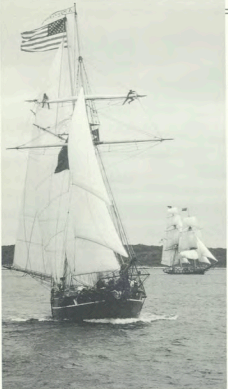
I have covered several replica tallships for this blog already and was looking for something that took a different approach or had a unique take: enter Freedom Schooner Amistad. This two-masted schooner is a replica of La Amistad, the slave ship at the centre of a seminal moment in the history of abolition in the U.S.
As you may know, the enslaved men aboard La Amistad successfully rebelled against the crew but were recaptured off the coast of Connecticut in 1839. A court case argued all the way to the U.S. Supreme Court eventually successfully resolved that the Mende people aboard had acted in self-defense and were not “cargo.”
You could watch the fictionalised Spielberg film…

…but know that it isn’t 100% accurate (nor should fictional accounts have to be). I found this video a helpful non-fiction summary.
The Freedom Schooner Amistad replica, run by Discovering Amistad, Inc, has a novel approach to sail training for youth that also involves historical lessons on the Atlantic slave trade and history of slavery in the U.S.
Specifications
Launched: March 25, 2000.
Rig: Topsail Schooner
Operator: Discovering Amistad, Inc.
Home Port: New Haven, CT
Flag: US
Call Letters: WCZ 9672
Length Over All: 129′ (39.4m)
Length Over Rail: 85′ (26m)
Length On Deck: 81′ (24.7m)
Length At Waterline: 78′ (23.8m)
Beam: 23′ (7.0lm)
Height of Masts: 100′ (30.5m)
Draft: 10.6′ (3.3m)
Gross Registered Tonnage: 90 tons
Sail Area: 5200 square feet (843 square meters)
Number of Sails (max.): 8
Top Speed Under Sail: 12-14 knots
Engine: CAT 3304 x2
Engine Power: 135
Top Speed Under Power: 10 knots
Fuel Tanks: 600 gallons
Water Tanks: 400gallons
Range: 700 N.M. under power
Number of Bunks: 21
Maximum Number of Passengers: 40 max (days sails)
Generator: Northern Lights
Benefits of the Build
Two of the seminal American sites for those interested in heritage boatbuilding are Port Townsend in Washington state, and Mystic Seaport in Connecticut. Freedom Schooner Amistad was built at the latter, using their Henry P Du Pont Preservation Shipyard – just one of the many initiatives this institution uses to preserve and promote maritime history. The Seaport itself boasts numerous historical vessels, both authentic and replica, and each have their own required maintenance.

The website for Mystic Seaport says that the building of the Amistad replica in 2000 was one of their proudest moments.
Discovering Amistad’s website starts their story a bit earlier. “The impetus for the building Amistad came from Warren Q. Marr II, former editor of the NAACP’s The Crisis magazine.” (Discovering Amistad) Marr had been a part of an awareness-raising disruption at a 1976 (the US’s bicentennial) tallship festival by obtaining a vessel and retitling it Amistad for the festival. He became interested in a more permanent testament and began to raise funds. In 1991 he founded Amistad Affiliates, a nonprofit organisation advocating for the creation of a replica schooner. This was in addition to being involved in the founding of the Amistad Research Centre.
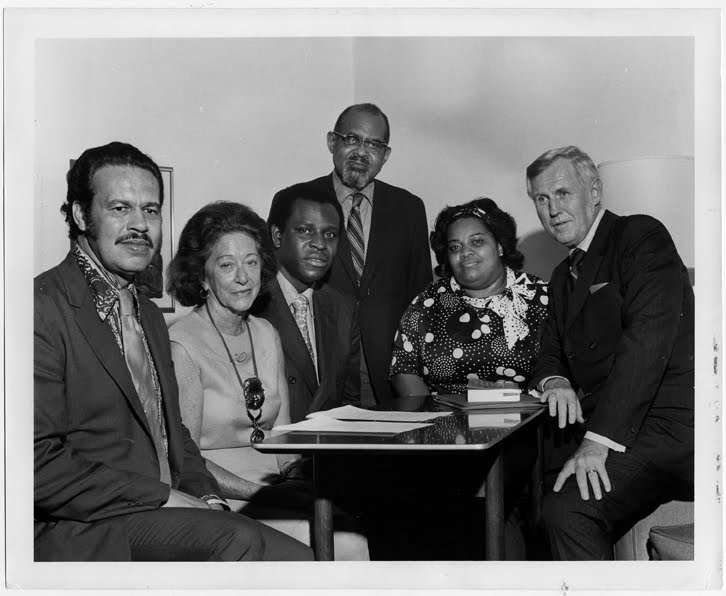
“Marr’s goal was to design the re-created vessel as a floating exhibit and classroom, assemble a crew, and sail her from port to port teaching the history of The Amistad Incident of 1839. Marr believed the Amistad story could foster unity among people of diverse backgrounds and help improve race relations.” (Discovering Amistad)
After many years a committee managed to find the builders at Mystic Seaport and financing from the State of Connecticut.
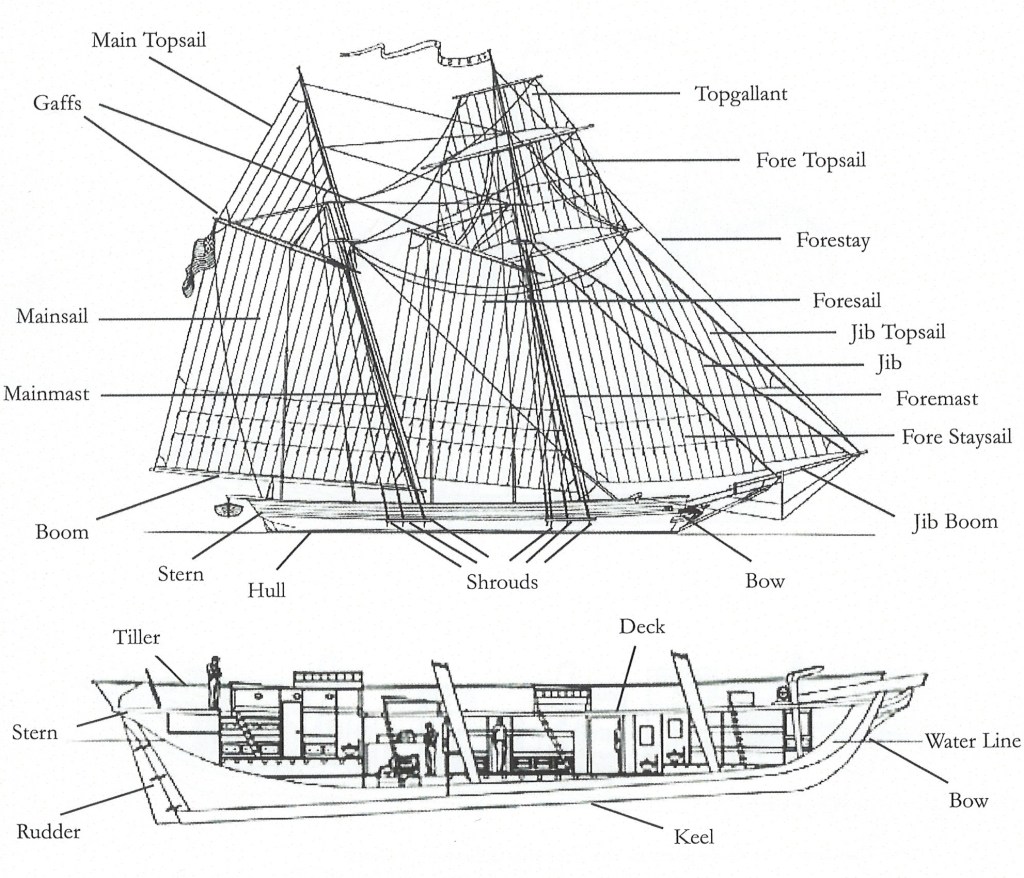
“The modern Amistad is not an exact replica of the original La Amistad. The designers of Freedom Schooner Amistad, Tri-Coastal Marine, of Richmond California, used modern computer technology to recreate a new vessel, following the general plan of “Baltimore Clippers”, ships unique for the period both in design and proportion. The new Amistad is slightly larger than the original La Amistad of 1839. The extra 10 feet of length was built into the ship to accommodate an engine room. The recreated schooner conforms to late 20th century specifications and U.S. Coast Guard safety requirements for passenger-carrying vessels.” (Amistadcommittee.org)

From Hambridge, Roger. “Framing the Schooner Amistad” Log of the Mystic Seaport Vol. 50, No. 2 (Autumn 1998): 30-33.
Images provided courtesy of Mystic Seaport Museum and may not be reproduced without permission.
The ship was not only a perfect project for Mystic Seaport’s practised shipwrights, but a chance to train others in the craft. “Amistad became the first and largest vessel ever constructed at Mystic Seaport, where shipyard staff coordinated construction with students from vocational schools in Connecticut and with volunteers.” (Discovering Amistad)

From Hambridge, Roger. “Framing the Schooner Amistad” Log of the Mystic Seaport Vol. 50, No. 2 (Autumn 1998): 30-33.
Images provided courtesy of Mystic Seaport Museum and may not be reproduced without permission.
“The construction of the schooner was conducted in the Museum’s Restoration Shipyard using traditional skills and techniques common to wooden ships built in the 19th century. Some of the tools used in the project were the same as those that might have been used by a 19th century shipwright: bronze bolts are used as fastenings throughout the ship to join the prime quality timber. Deck planks were cut out from the iroko trees donated by Sierra Leone – the homeland of the original Amistad captives of 1839. The construction took two years – on March 25, 2000 the Freedom Schooner Amistad was launched , with 10,000 people in attendance. On June 13, 2000 the recreated Amistad sailed for the first time.” (admistadcommittee.org)
I love the bit about iroko trees from Sierre Leone – it is little bits of meaningful additions to construction that make a ship like this into an engaging historical monument. Another interesting bit of information on the wood comes from a Mystic Seaport Log article. It notes that Live Oak, used for the lower frames (White oak was used for the upper frames), was obtained after the devastation of a hurricane fell many old growth trees. (Snediker, Spring 2000)
Quentin Snediker, writing for Mystic Seaport on the occasion of the launch, remarked that the build had comprised 26 months of labour, including “225 craftspeople, students, and volunteers exerting well over 70,000 person hours.” (Snediker, Summer 2000)
Life After Launch
A lovely bit of protocol happened during the Amistad’s shakedown cruise. The brig Niagara was in the bay and gave a salute. Niagara was similar to the brig Washington, who in 1839 re-captured the ship and its formerly enslaved crew. Now, instead of imprisoning them, it saluted them.
The Amistad under sail on its shakedown cruise.
From Snediker, Quentin. “Amistad Sails” Log of the Mystic Seaport. Vol. 52, No 1 (Summer, 2000): 24-26.
Images provided courtesy of Mystic Seaport Museum and may not be reproduced without permission.

The ship was originally operated by Amistad America Inc., which did educational and commemorative voyages, while based out of New Haven, Connecticut. By 2013, the entity was in financial trouble and the ship, by some accounts, was not in good shape. Amistad America Inc lost its non-profit status for failing to pay taxes, and began to have a contentious relationship with the state, which funded it. (Reuters, 2013)
Most of the websites and articles I have read are polite about AA’s failures, and I don’t want to judge them. Non-profits are hard to run, government often hard to work with, and ships are extremely expensive. The articles in the Connecticut newspapers are all behind a paywall, and I’ll demur for now going through the state’s records to further explore the controversy.
Suffice to say that by the middle of the 2010s, a State of Connecticut Advisory Committee recommended the creation of Discovery Amistad, a new non-profit to purchase the replica ship and take over the mission.
“While the ship was prepared to be Coast Guard compliant, the organization developed interactive, proprietary curriculum that addresses equity and adheres to the most up-to-date national C3 (College, Career and Civic Life) social studies framework.” (Discovery Amistad).
It still undertakes voyages (focused in Connecticut), and their 2023 annual report they reported a considerable number of school programs and students reached.
The nonprofit employs a Shipkeeper, RJ Lavallee, who video-blogs about the maintenance work he does aboard the ship, sure to appeal to the boaties out there!
Further Thoughts
It’s thrilling to see such a unique approach to a heritage vessel. To combine sail training and education for youth with direct lessons about social justice and the lessons the past has for us today is very inspiring.
It should be noted that the educational mission doesn’t just focus on “guilt” either, but on positive messages and lessons we can use today. A 2018 church congregation on board the vessel received programmes on “the history of La Amistad and the role of congregational churches in the 1839 events, and the other on the culture and talents of those Africans who were taken from their homeland.” (Page, 2018)
But this story also has cautionary messages. “Life After Launch” for any ship of this size is incredibly challenging and expensive. Freedom Schooner Amistad survives because of substantial state support, and something happened at least once in the last twenty years to endanger the the ship and the non-profit. It’s not impossible to imagine things going wrong again.
Mystic Seaport got to hone and share their tremendous skills, Connecticut has benefited from outdoor education and sail training, but the success of the non-profits running her are still challenging and require public support and strategic, creative operation from underappreciated staff.
But what a life!
“Discovering Amistad board member Kai Perry has been a part of the ship’s crew for 20 years. “We were sailing all around the country, telling the story of the Amistad incident of 1839, hoping to remind students, community members, young and old, our tragic history of slavery and our ongoing fight for freedom,” she said. “I did that while sailing, living, and teaching aboard the ship.” ” (Seunwoo, 2023)
Stupendous!
(July 12, 2014) ‘”Amistad’ replica lends a touch of drama to Connecticut tall ships fest” Reuters. Retrieved January 15, 2023.
Hambridge, Roger. “Framing the Schooner Amistad” Log of the Mystic Seaport Vol. 50, No. 2 (Autumn 1998): 30-33.
Page, Drew. “Deeper Understandings Come from Worship Onboard Freedom Schooner Amistad” sneucc.org (Retrieved January 15, 2023). https://www.sneucc.org/newsdetail/worship-on-the-freedom-schooner-amistad-12288838
Seonwoo, Eunki “ICYMI: An inside look of La Amistad” MV Times. June 16, 2023
Snediker, Quentin. “Strength and Durability: the Woods of the Freedom Schooner Amistad.” Log of the Mystic Seaport. Vol 51, No. 4 (Spring 2000): 86-89.
Snediker, Quentin. “Amistad Sails” Log of the Mystic Seaport. Vol. 52, No 1 (Summer, 2000): 24-26.
Special thanks to Mystic Seaport.
Clio’s Armada is a blog series Tom is writing based on his passion for heritage boatbuilding and examples he has seen of it around the world. Read about over twenty examples from the 1860s to the 2010s!
 North Wind Heritage Consulting