

In 2023 I got to co-create and install an exhibition on the R. Tucker Thompson, which I wanted to call “Dreamwrights” (!) but was eventually convinced to title “Tall Ship, Big Dreams: The Story of the R. Tucker Thompson”. Not only was the exhibition a labour of love, but it was also the satisfactory conclusion to my voyage on that ship a few years earlier.
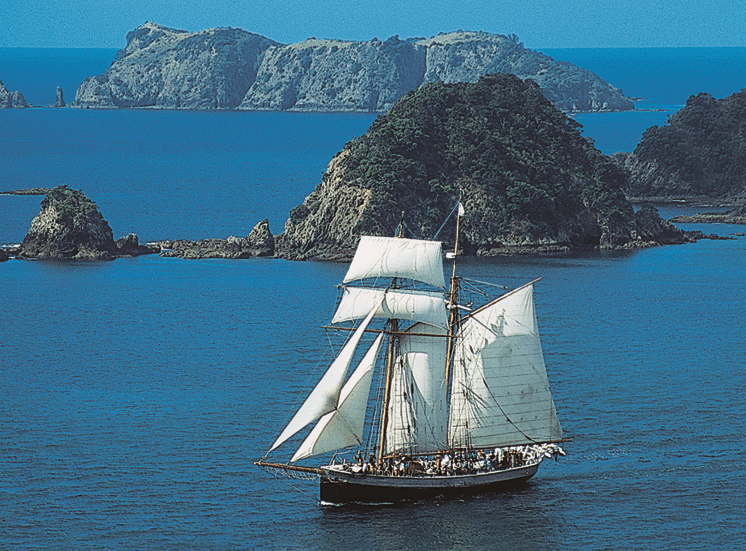
R. Tucker Thompson the person was an interesting fellow from California, passionate about sailing and the sea. In his retirement in New Zealand/Aotearoa, he decided to build his own ship – though sadly he passed away leaving the project unfinished. His son and another boatbuilder, Russel Harris, and others, took up the project and launched the ship from Mangawhai in 1985.
Since then the gaff-rigged topsail schooner has taken part in re-enactments, taken tourists like myself on sail, and most pertinent to this blog: engaged in sail training expeditions for rangatahi/youth of the North for decades.
Specifications
Draft
2.6m / 8’6″
Displacement
60 tonnes
Engine
180 horsepower John Deere diesel
Total sail area
179 sq metres/3000 sq ft
Day charter capacity
47 passengers
(Source and more details here.)
Benefits of the Build
The ship began being built in a suburb of Whangerei when it was Thompson Sr.’s project. After his passing, the hull was moved to the lovely surf town of Mangawhai, just metres from the harbour. Locals there remember the build fondly, seeing it progress year after year. Russel Harris joined Tod Thompson on the project, having worked with him on rigging the 1978 replica of HMS Bounty, built in New Zealand.
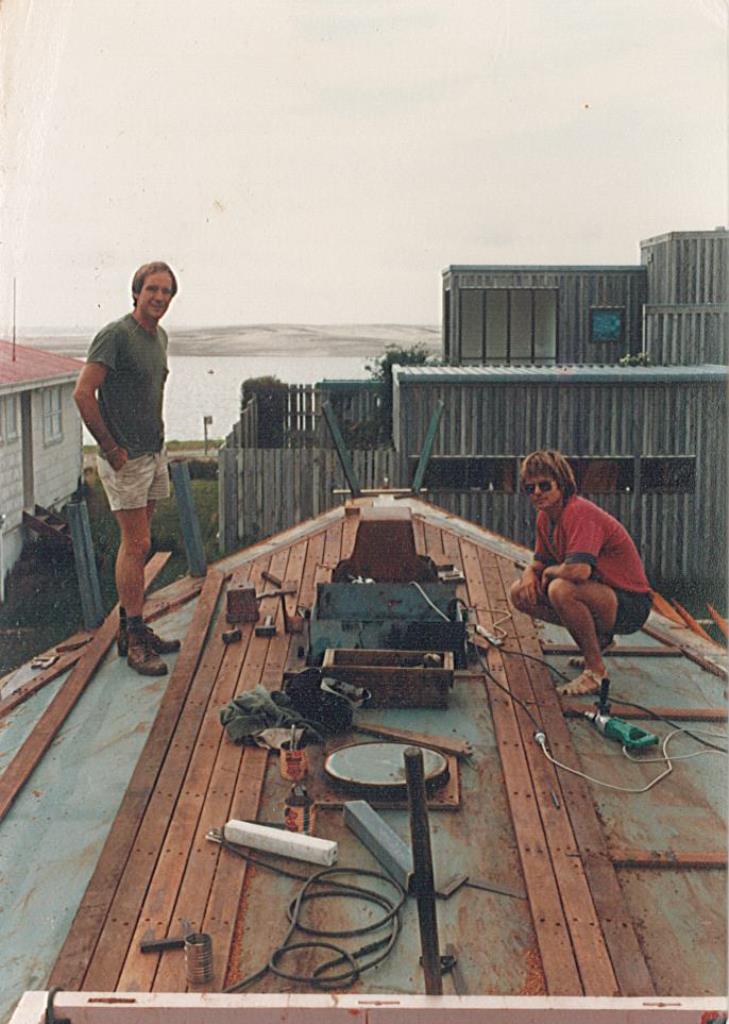
The design was based on Halibut schooners of the Northwest American Coast, “which were considered to be fast and sea kindly as well as easily manned” according to the Tucker’s website.
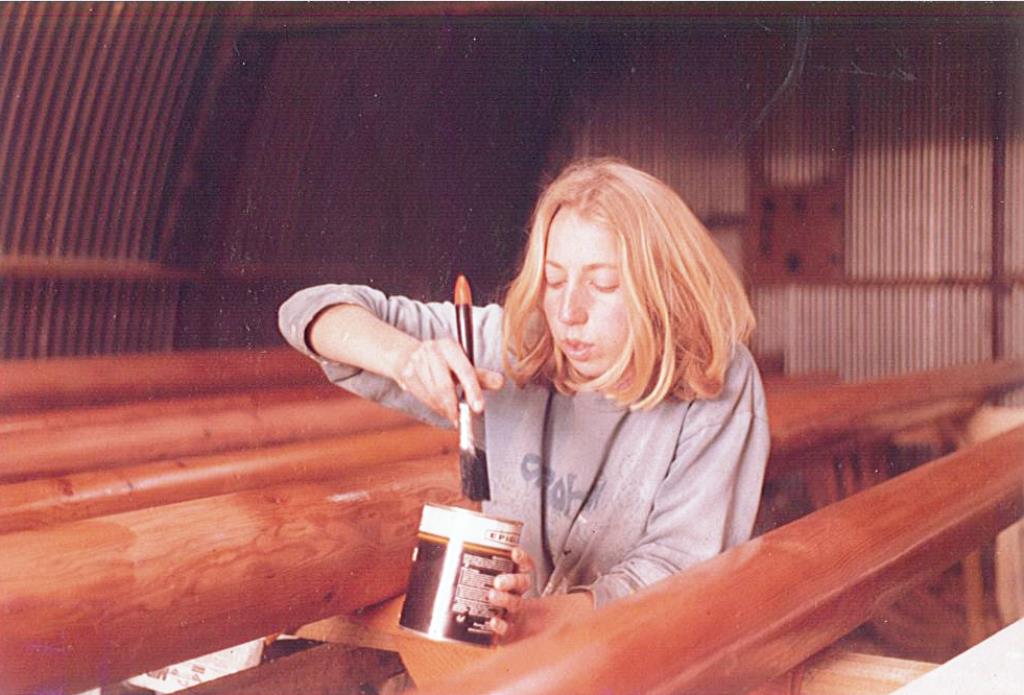
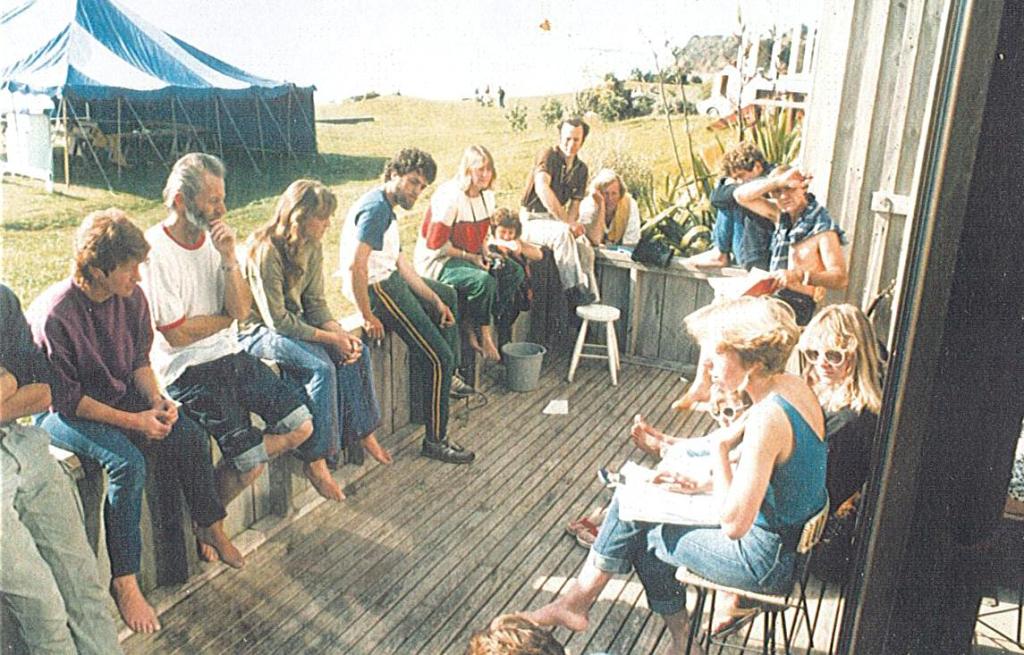
Having spoken to Russel and Todd, they were always clear that the build was the product of a large team – some more frequent than others.
Life after Launch
The launch was an iconic moment for Mangawhai and suitably again the work of the community. Folks showed up with tractors, others with cameras. Mangawhai is a magical town where people help others build their dreams.
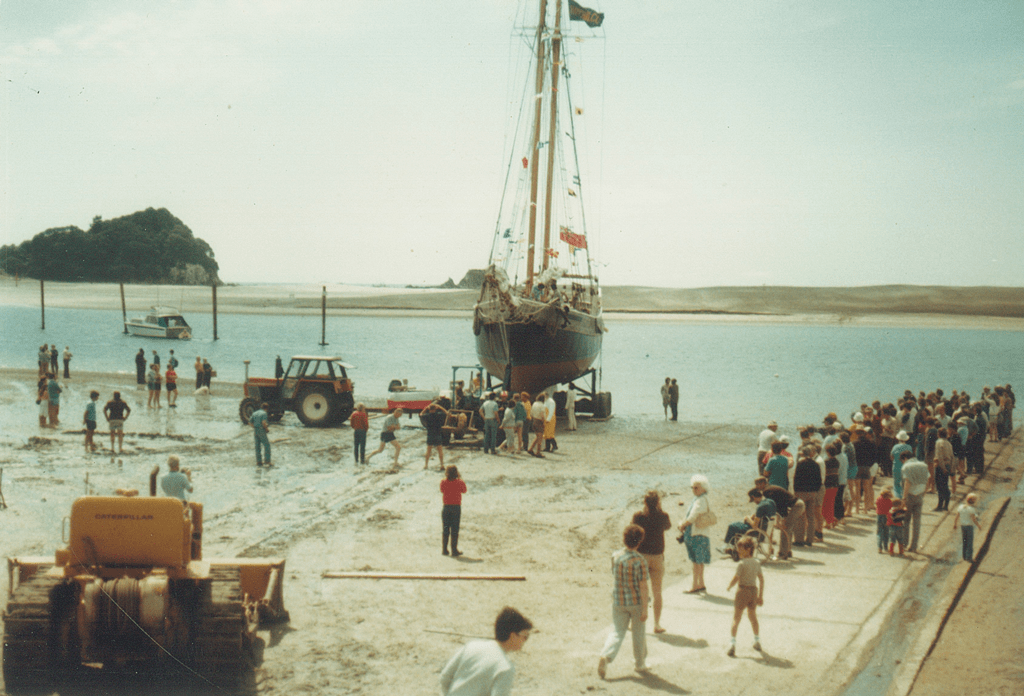
Important for a country and project committed to reconciliation, the launch happened with full Maori protocol as well. A kaumatua (Maori elder) blessed the launch, and the ship was given a kaitiaki (or guardian) called Karewa. Karewa has been with the ship ever since. The RTT Sail Training Trust has always emphasized that Maori and Pakeha (European settlers) sailed together on ships and that the Tucker was a place of intercultural cooperation.
According to the sail training trust’s website, “The Tucker’s maiden voyage was around the world. She took part in the First Fleet Re-enactment in 1988 (itself an amazing story, and in which R. Tucker Thompson sailed alongside the 1978 Bounty, which Russel and Todd had worked on). Departing in 1987, the ship sailed across the Pacific, through the Panama Canal to meet the seven ship fleet in England. From there the seven ships had an eventful sail to Australia. Since then the Tucker has undertaken numerous voyages up to the Pacific, as well as Korea, Japan, and the Pacific West Coast of Canada and America.”
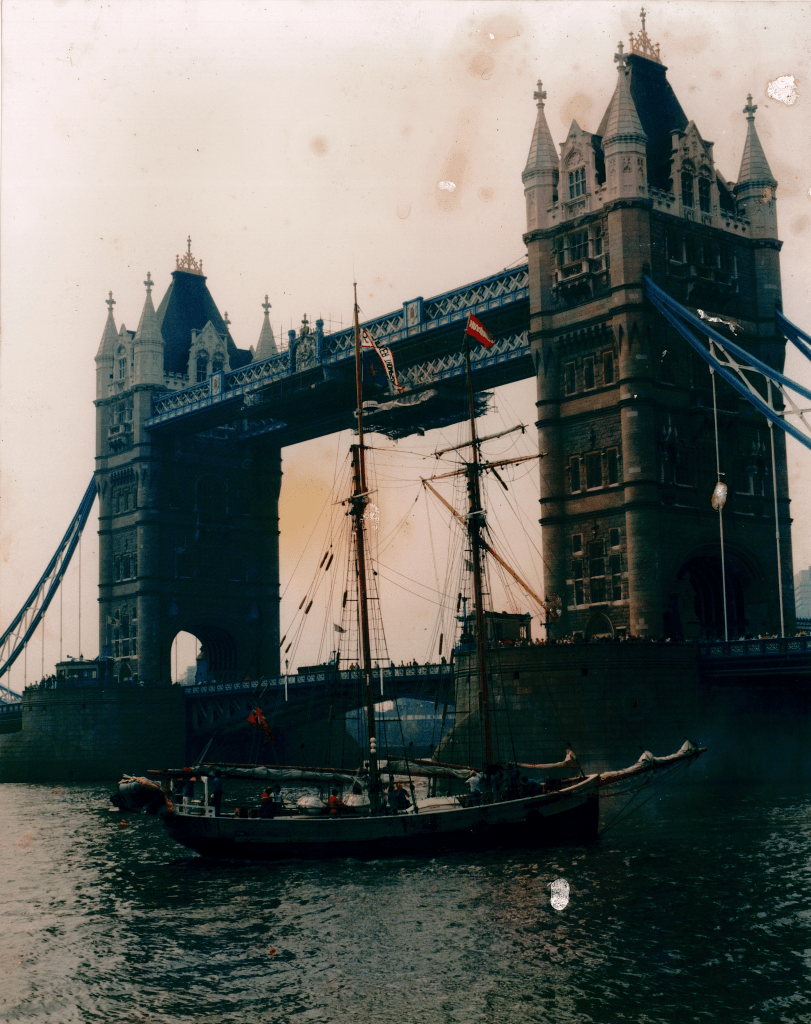
The gaff-rigged schooner could only find a life in re-enactments for so long though. Many ships at this stage are faced with a decision to go into drydock and become a museum ship or find some other life. The R. Tucker Thompson became a sail training vessel, creating life changing experiences and building community and character among rangatahi (youth) of the North Island.

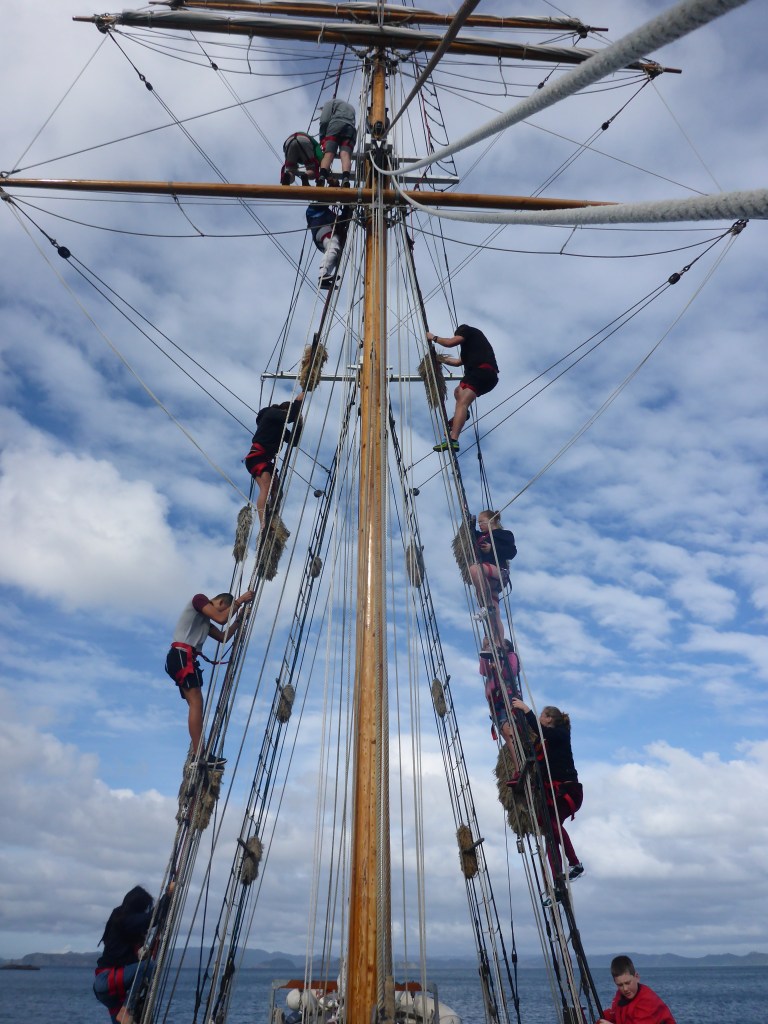
Tourist voyages in the summer season (which is what I experienced) pay a lot of the bills. The gorgeous Bay of Islands as a backdrop, you can climb the rigging and help hoist the sale, although it mostly runs under motor power. While I enjoyed myself immensely, this is also the voyage where I found out I was quite literally a “tenderfoot.” That rigging is hard on the soles!
During the winter, youth from around the North Island are taken on week long voyages and by the end are expected to sail the ship home themselves, while the crew supports.
Further Thoughts
An extended life after launch is one of the challenges of larger boat replicas. The Nonsuch was always intended to become a drydocked museum ship. The HMB Endeavour was purchased by the Australian Government. R. Tucker Thompson transitioned into a noble role unique among the replica vessels I have discussed so far.
“We do not train youth for a life at sea … we use the sea to educate youth for life”. – Motto of the Los Angeles Maritime Institute.
Sail training highlights discipline and teamwork in a fascinating way. Sail Training International and its member national organisations around the world commissioned a study from the University of Edinburgh in the 00s. Their findings confirmed STI’s belief. Quoted from from STI’s website, the study concluded:
- Young trainees who participate in off-shore sail training programmes show measurable improvements in social confidence and their ability to work with others … and the benefits are sustained over time after the voyage experience.
- The most common reasons for young people wanting to participate in a sail training voyage are the anticipation of adventure, making new friends, seeing new places and conquering their fear of heights … with seasickness, a fear of heights, and a concern about being among strangers in a confined space the main anxieties.
- The positive value of the sail training experience transcends national and cultural boundaries and is not much influenced by the size or rig of the vessel.
- The most effective sail training experience in developing social confidence and teamwork skills is delivered by vessel operators who offer well structured educational programmes … the more emphasis there is on defined and purposeful activity relating to these goals, the more successful the programme is in those terms.
(Source and more about the study here).
Sail Training, in a locale such as New Zealand or the UK where it is supported, seems like it can be a reasonable “life after launch” for a heritage vessel – but it is also one of the most expensive forms of outdoor education for youth. Nonetheless, a perfect example of how even after the build, heritage vessels can build community and share skills.
You can see the exhibition Tall Ship, Big Dreams: The Story of the R. Tucker Thompson at Mangawhai Museum, two hours north of Auckland, until March of 2024.
R. Tucker Thompson Sail Training Trust. Visited Dec 5, 2023. https://tucker.co.nz/
Clio’s Armada is a blog series Tom is writing based on his passion for heritage boatbuilding and examples he has seen of it around the world. Read about over twenty examples from the 1860s to the 2010s!
 North Wind Heritage Consulting
One thought on “Clio’s Armada: The R. Tucker Thompson and Sail Training for Youth”