
Tom Long, 2025
Mixedness in pop culture can often be simplistic, and intended to serve a single story or character point (often a stereotypical one). This isn’t just found in movies and comic books though, you can also find the many-times-removed descendant of a Cherokee Princess in academia, politics, and casual conversation.
There isn’t anything wrong with being proud of such a link, but problems come in when persons with a “convenient Indian ancestor” take grant money, positions, or prestige from Indigenous people with less privilege. Or when the claim is made with no awareness of the complexities around it.
Magic Chocolate and Explosive Tipped Arrows
Movies have tended to include a plot element of Indigenous descent in order to justify a magic skill, outstanding physical ability, or some other characteristic.
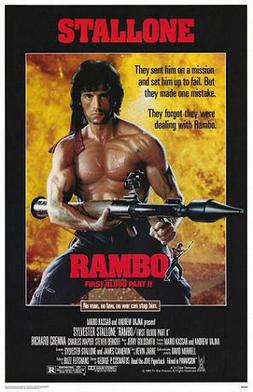
John Rambo, portrayed in film by Sylvester Stallone, is revealed in the second film to be half Native American, half German (a “hell of a combination.”) An accompanying book specifies this descent as Dine (Navajo).
This seems intended only to make Rambo’s combat and guerilla abilities seem inborn and supernatural.
Stallone is not mixed himself.
Image Courtesy of Tristar Pictures.
Marshall Murdock: “Rambo, John J. Born 7-6-47 in Bowie, Arizona. Of Indian-German descent – that’s a hell of a combination… 59 confirmed kills. Two Silver Stars, four Bronze, four Purple Hearts. Distinguished Service Cross and Medal of Honor. You got around, didn’t you? Incredible.”
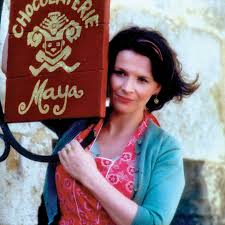
2000’s Chocolat features a main character, Vianne Rocher played by Juliette Binoche. She and her new chocolate shop start to influence a repressed French village in remarkable ways. Is it just good chocolate? Maybe, but Vianne reveals that she is half-Maya, giving her chocolate recipes a mystical air.
Juliette Binoche is not mixed.
Image courtesy of Miramax.
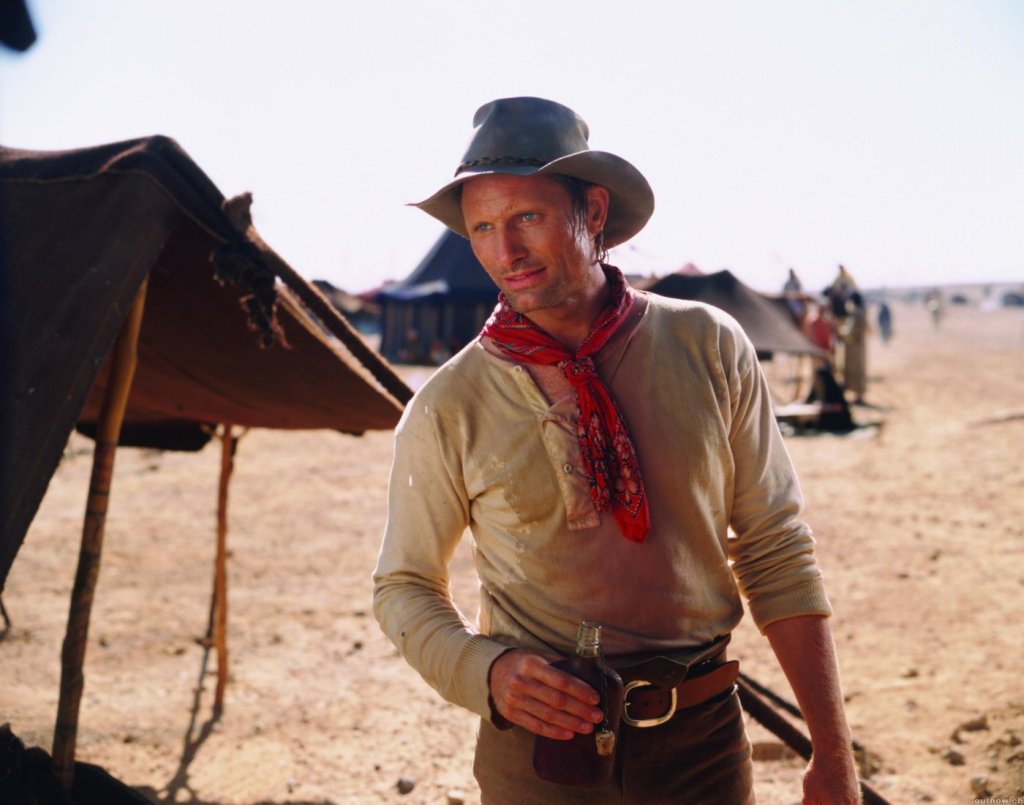
2004’s Hidalgo featured Viggo Mortensen playing a mixed cowboy engaged in a horse race in the middle east. It is based on a real story – or at least the story as told by Frank T. Hopkins – who claimed to be half-Lakota among other unsubstantiated tales. His mixedness here lends itself to the trope of magical riders with close relationships with their steeds.
Viggo Mortensen is an international treasure. But he is not mixed.
Image courtesy of Touchstone Films.
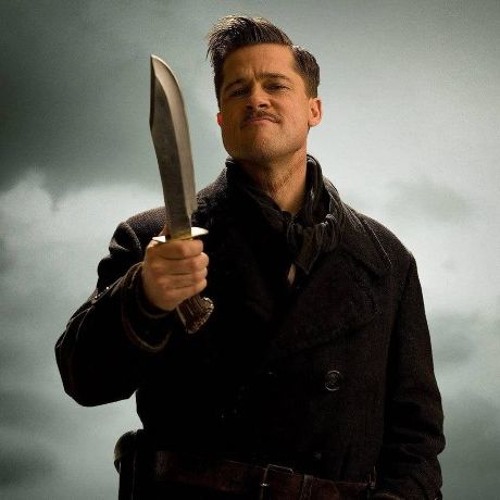
Brad Pitt’s Lt. Aldo Raine from Quentin Tarantino’s 2009 film Inglourious Bastards makes a point of mentioning his mixed blood (unspecified tribe) in his first speech to his squadron. And a terrifying speech it is. His ancestry is a plot point mainly in supporting the savagery with which he fights.
Brad Pitt is not mixed.
Image and clip courtesy of Universal.
Whew! For a palette cleanser, let’s look at more innocuous example.
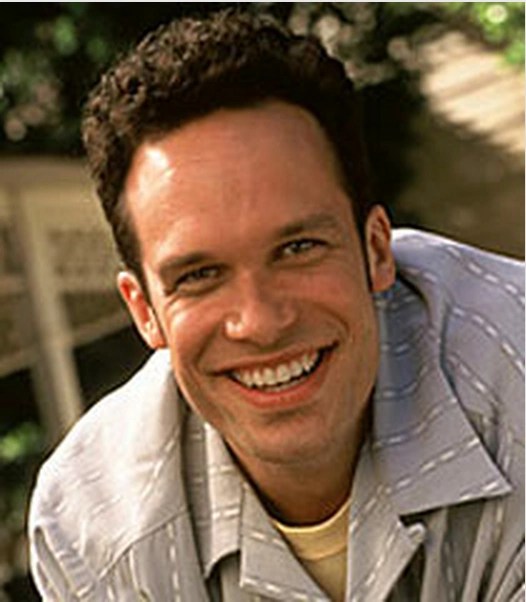
In an episode of the Drew Cary Show (1995-2004), the gang of Drew’s friends visit a racist country club. Since they are all white, but the story must have a personal impact, Oswald suddenly finds a convenient ancestor. He asks one of the country club villains “what would happen if someone weren’t pure white, say 1/16th Cherokee?” They get their answer, leave the club, and Oswald’s ancestry never gets brought up again.
Why does the Cherokee come up so often as the source of the convenient ancestor? Gregory D. Smithers, author of 2015’s The Cherokee Diaspora gives an idea.
“As European colonialism engulfed Cherokee Country during the 17th and 18th centuries, however, Cherokees began altering their social and cultural traditions…The Cherokee tradition of exogamous marriage, or marrying outside of one’s clan, evolved during the 17th and 18th centuries as Cherokees encountered Europeans on a more frequent basis. Some sought to solidify alliances with Europeans through intermarriage.” Smithers (2015)
Smithers goes on to reveal that Southerners in the 1840s and 50s U.S. used claims of Cherokee ancestry (especially from Princesses) to add an air of antiquity, independence, and self-determination in their conflict with the North.
Self-aware Stories With Star Casting
There’s an interesting film that combines a character’s convenient ancestor with an actor’s.
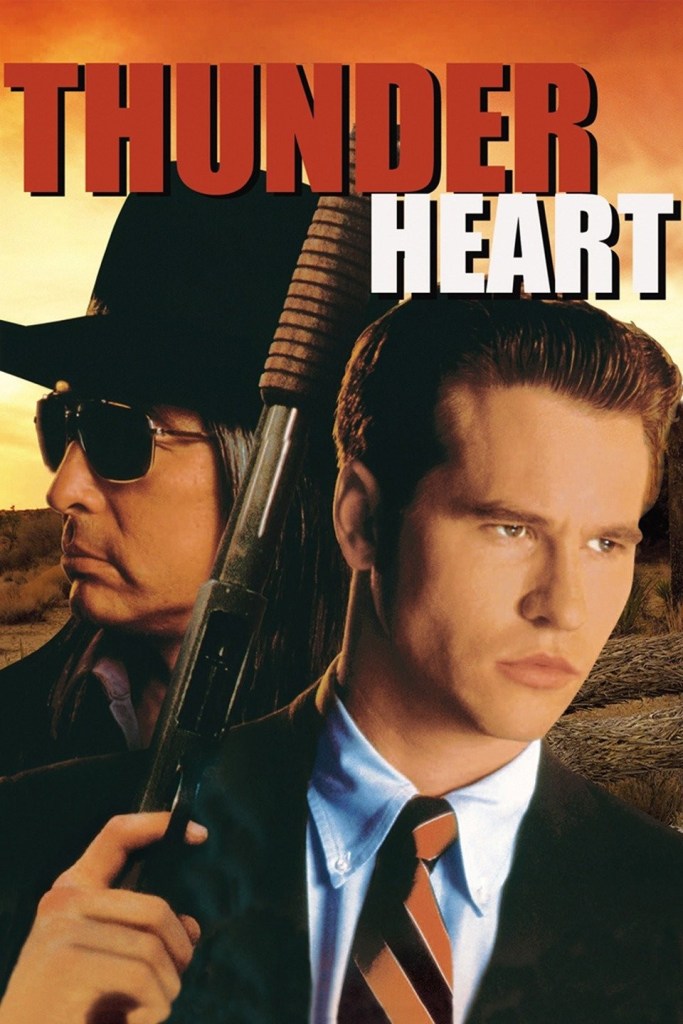
Val Kilmer played FBI Agent Roy Levoi in 1992’s Thunderheart. Levoi is one quarter Sioux by birth (it is never specified what branch), even though he is repeatedly shown to know nothing of the culture or language. The FBI nonetheless use him as a PR tool during a reservation operation. It’s a neat movie that understands the convenient Indian ancestor trope and its problems.
Image courtesy of Tribeca.
In one of the film’s first scenes, an FBI director, Dawes, summons the mixed-blood agent Ray Levoi to his office. He points out Levoi’s Sioux heritage, which makes Ray uncomfortable, then makes it clear he intends to use it as part of assigning Ray to a case on a Sioux Reservation.
Dawes: This is a murder investigation. It’s also about helping the people. Helping people covered in illusions of the past come to terms with the realities of the present. Any questions?
Levoi: My assignment sir, what’s my cover?
Dawes: No cover. You’re going in there as who you are: an American Indian Federal officer. I happen to believe with a Native American representative in there that we can diffuse the tension and improve relations.
Levoi: (laughs uncomfortably)
Dawes: Hey, as long as our PR officer’s disseminating information that we’re sending the Indians one of their own, I don’t think anybody’s going to be asking you to weave any baskets or make it rain.
The limits of the FBI’s PR occurs swiftly when Ray arrives on the reservation, as Sioux speak to him in their language and ask him about his parentage, neither of which he is able to answer. The film correctly shows First Nations dubious response to those with convenient ancestors who have no connection to their living languages or communities.
This is honestly a great movie. But despite this self-aware storytelling, Ray Levoi is played by Val Kilmer (RIP Madmartigan). A great actor, Kilmer in this period also had undeniable star power, but is dubiously mixed. He claimed to have some (you guessed it) Cherokee heritage.
Roles that might be Redface
The flipside to characters with convenient ancestry is actors who do. This is well-trodden ground when it comes to portrayals of “full-blood” Indigenous people. I give these examples because they are pertinent – but this is not a simple issue and I am not trying to make it seem so.
How much Indigenous ancestry justifies taking on an Indigenous role? I would like to think that it is not about blood quantum, but about acceptance by contemporary communities (like Lou Diamond Phillips), but even Indigenous people are split on this subject.
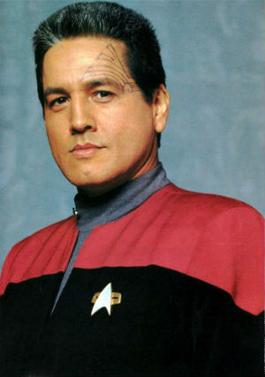
Robert Beltran portrayed Chakotay on Star Trek: Voyager for 7 seasons. Beltran is Mexican and identifies clearly as such. He was able to have Chakotay’s nation identified as a central American one (albeit fictional), which fit better with his own heritage.
It was nice to see a Native character in a future setting, bucking the trend, but the role was plagued by mistakes. Besides Beltran’s casting, the production hired noted fraud and Pretendian Jamake Highwater as their consultant, even through he’d already been outed.
Image Courtesy of Paramount.
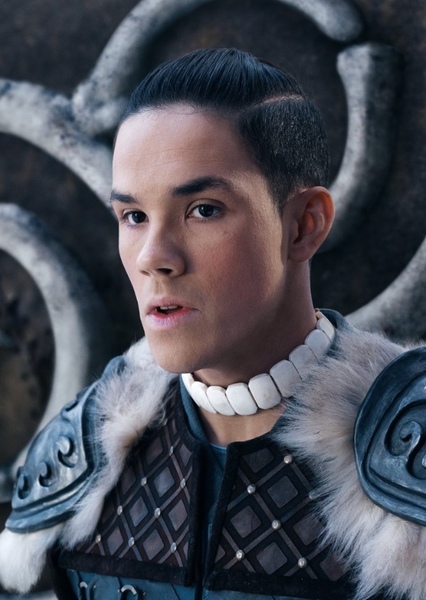
Ian Ousley portrayed Sokka in the latest live-action adaptation of Avatar: The Last Airbender. Sokka and his sister are from a fictional nation (The Water Tribe) which was deliberately made with Inuit and First Nations in mind.
Ousley is mixed but claims membership in a non-recognized Cherokee band that is not accepted by the other branches of the Cherokee nation.
Image Courtesy of Nickolodeon
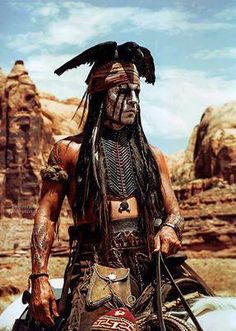
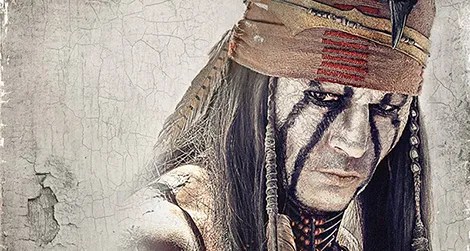
And of course the casting heard around the world is Johnny Depp as Tonto in 2013’s Lone Ranger. Depp justified his casting by repeating a family claim that they had descent from a Cherokee or Creek ancestor. This has not been proven with any documentation.
The casting was controversial, with Indigenous people on both sides.
Image Courtesy of Disney.
I don’t believe any of these actors entered into their contracts with ill intent. Johnny Depp spoke passionately about wanting to right the wrongs of previous portrayals, for instance. But taking these roles did mean that actors who were actually mixed or First Nations were denied that opportunity. It isn’t a simple matter.
I’ll give the last word to Thomas King, who revealed in 2025 he could not prove the veracity of his own Indigeneity.
“Film has little veracity to begin with. The only “truth” you see on the screen is the fancy that you see on the screen. We expect too much and too little from Hollywood, and we never get what we desire.” King (2012), Pg 45.
Do you have another good example of “convenient Indian ancestors” in movies, film, or comic-books? Tell me about it in the comments!
MixedMedia is a blog series Tom is writing based on explorations of his identity as a Métis person, a mixed person, and an avid consumer of pop culture.
Sources
Donahue, James J. Indigenous Comics and Graphic Novels. University Press of Mississipi, 2024.
Del Barco, Mandalit. “Does Disney’s Tonto Reinforce Stereotypes Or Overcome Them?” Code Switch, NPR. July 2, 2013. Retrieved Nov 11, 2025.
King, Thomas. The Inconvenient Indian: A Curious Account of Native People in North America. . Toronto: Doubleday Canada, 2012.
N.b. Thomas King recently admitted that he could not prove the Cherokee ancestry he has claimed all his life and ceased to identify as an Indigenous person.
Miles, Carol (2001) “Chocolat,” Journal of Religion & Film: Vol. 5: Iss. 1, Article 6.
DOI: https://doi.org/10.32873/uno.dc.jrf.05.01.06
Available at: https://digitalcommons.unomaha.edu/jrf/vol5/iss1/6
O’Reilly, Basha. “Hidalgo – from Myth to Movie” thelongridersguild.com. Retrieved November 13, 2025.
Smithers, Gregory D. The Cherokee Diaspora: An Indigenous History of Migration, Resettlement, and Identity. New Haven, CT: Yale University Press, 2015.
MixedMedia Chapters

 North Wind Heritage Consulting
6 thoughts on “MixedMedia Pt 7: The Convenient Indian Ancestor”